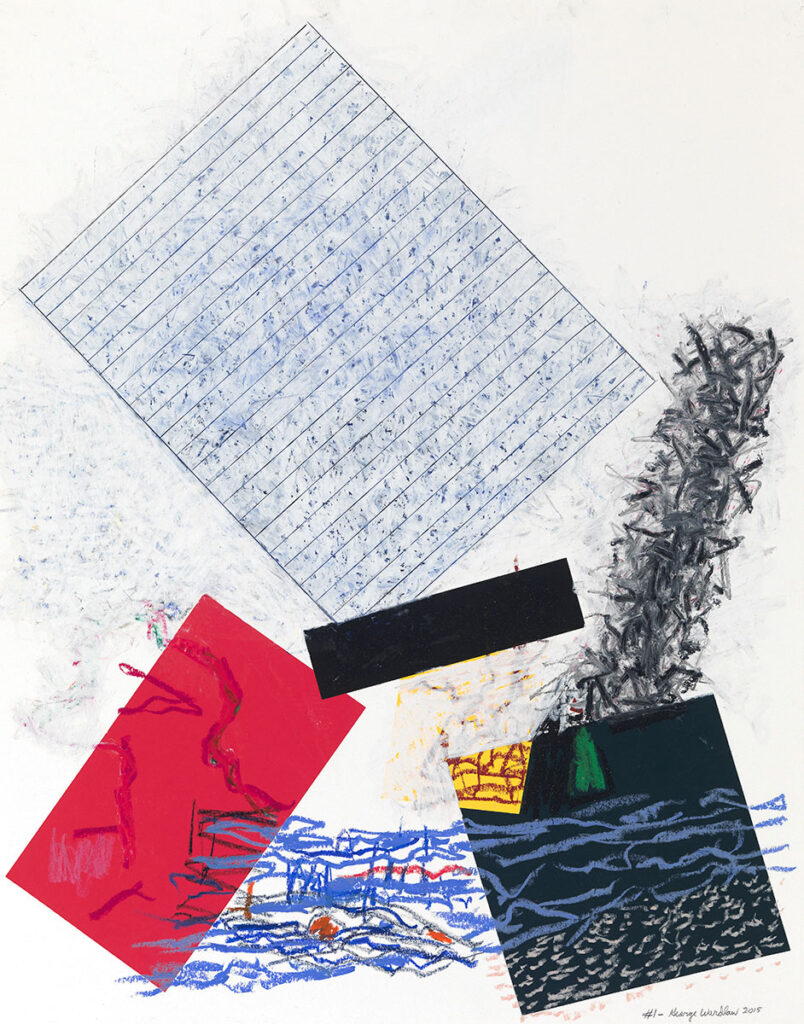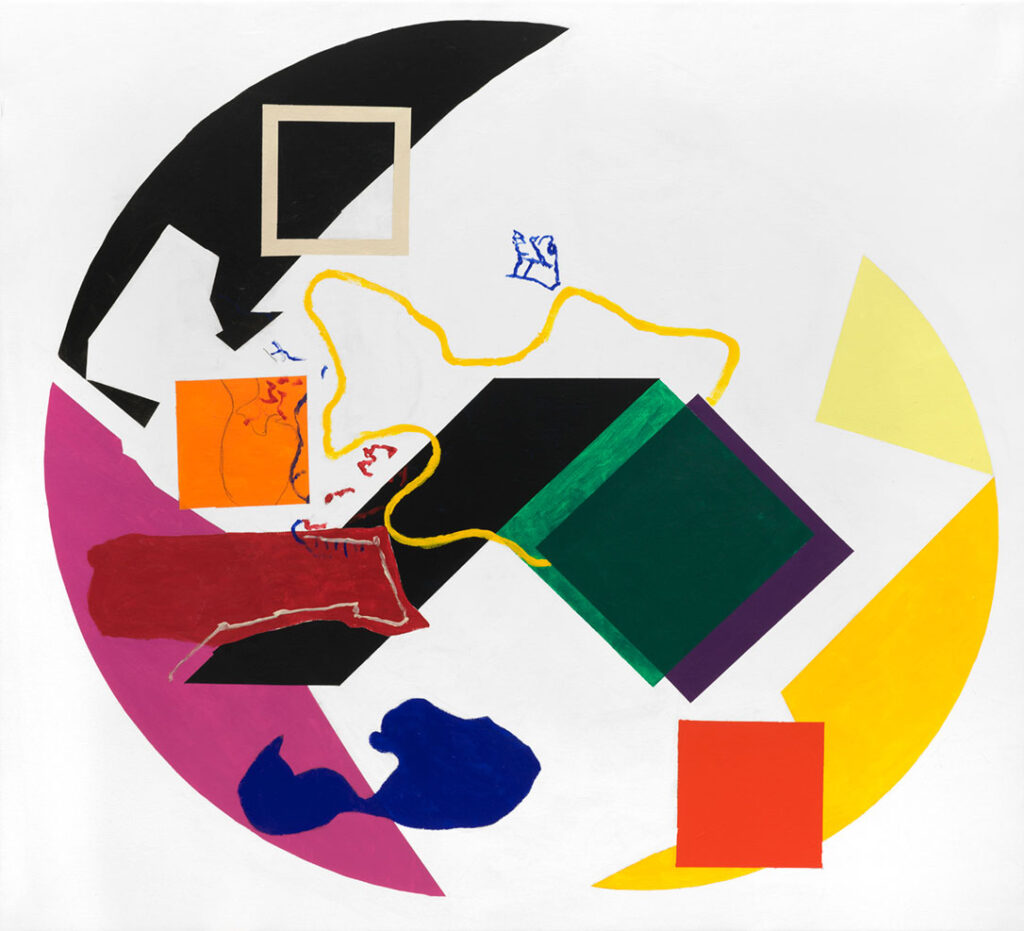
recent work

Available January 2012

A comprehensive book about the
artwork and career of George Wardlaw

George Wardlaw: Crossing Borders

by J. Richard Gruber, Ori Z. Soltes, Suzette McAvoy

The artworks in this book are the culmination
of over 60 years of making art
by American artist George Wardlaw.

170 color plates highlight this remarkable body of work

Ordering Information and Events

George Wardlaw: Crossing Borders

Ordering Information
Press Kit

George Wardlaw: Crossing Borders
by J. Richard Gruber, Ori Z. Soltes, and Suzette McAvoy
Preface by Grace Glueck
Published by Marshall Wilkes, Inc.
Publishers, Maine and New York
www.marshallwilkes.com
Hardcover, 184 pages
11 x 11 inches
Full color throughout
86 Color Plates; 104 Color Illustrations
ISBN: 978-0-9839670-0-2
Available Now
$65.00


Download a PDF preview copy. (2.5 MB)

Crossing Borders presents over 180 full-color plates and illustrations, representing six decades of work by American artist George Wardlaw (b.1927), the first comprehensive account of this remarkable body of work. Critical essays by J. Richard Gruber, Ori Z. Soltes, and Suzette McAvoy characterize Wardlaw’s work, placing it in context with the significant art movements of his time, beginning in 1948, with non-objective painting and tracing his journey across geographical, physical, intellectual, philosophical, and spiritual boundaries.

Never confined by categories, Wardlaw explores medium, form, scale, and color as a lifelong dialogue between abstraction and spirituality. From his Baptist and Native American roots to Judaism, from the rural south to the urban northeast, from painting to sculpture and back again, Wardlaw produced series after series of profound artworks on his quest for creative and spiritual resolution.

Raised on a farm in Mississippi during the hard years of the Great Depression, Wardlaw emerged from his meager beginnings to become a member of the avant-garde art scene in New York City during the 1950s and ’60s. He went on to become an important figure in American art and an influential teacher. After serving in World War II, Wardlaw used the GI Bill to attend the Memphis Academy of Arts. He taught and studied art at the University of Mississippi with David Smith, Jack Tworkov, and Reginald Neal; was an Assistant Professor at LSU and SUNY; and was later recruited by Jack Tworkov to teach at Yale before serving as the Chair of the Art Department at the UMASS, Amherst, where he remained for the rest of his academic career.

Beginning with his first solo exhibition at the Betty Parsons Gallery in 1960, Wardlaw has continued to exhibit widely in galleries and museums, including a solo show at the deCordova Museum and Sculpture Park in 1978, and a mid-career retrospective at the Memphis Brooks Museum of Art and the Memphis College of Art in 1988. His work is in several public and museum collections, including Johnson Wax Headquarters, the Milwaukee Art Museum, the Memphis Brooks Museum of Art, and the Mississippi Museum of Art.

Throughout his career, Wardlaw devoted his life to making art, driven by his passion and desires rather than responding to popular trends. This freedom of expression yielded a significant and impressive body of work—one that reveals a unique story, both personal and universal, weaving one man’s perspective into the larger canon of twentieth-century American art.

Quotes About the Book
“A significant figure in American art, George Wardlaw has prolifically produced paintings, drawings, and sculpture for more than sixty years. The insightful critical essays and numerous illustrations in this volume place the artist’s work in context with relevant movements of his time, reveal the remarkable breadth of his technical mastery, and elucidate the evolution of his singular aesthetic vision. This book serves as an exemplary guide to Wardlaw’s artistic legacy, and is also an important contribution to the study of twentieth-century American art.”

—Daniel Piersol
Deputy Director for Programs
Mississippi Museum of Art

“No one can say that George Wardlaw is a one-theme artist. Unlike less venturesome colleagues, content to exploit a signature idea or two, Wardlaw’s aesthetic appetite seems unbounded. His passionate exploration of modes and expressions has taken him in practice from jewelry-making to painting to monumental sculpture; in subject matter from lofty religion to humble apples to the rugged coast of Maine. He has aptly described his art as a kind of collage…of different places, times, experience, materials.

“In short, he has produced a rich and varied body of work whose scope defies the limits of a human lifetime, an output that resonates with the insights he has gained in the spiritual quest that eventually led him from Christianity to Judaism.

“If I were forced to choose among the Wardlaw works I could most rewardingly live with, I would settle on his haunting Maine series, begun in the 1990s and still going on. Distillations of land and sea forms in stark grays, blacks, and whites, they are by turns restless, calming, meditative, mysterious, gentle, thunderously foreboding. Responding to these formidable works, one feels acutely keyed in to the artist’s anima, a deeply inspiriting encounter. Thank you, George, for giving your insights and feelings such powerful visual voice.”

—Grace Glueck
Grace Glueck served for many years as an art writer and critic for The New York Times.

Book Events


George Wardlaw Installation: Passage into Abstraction

Courthouse Gallery Fine Art, Ellsworth, Maine, will host an exhibition for American artist George Wardlaw in conjunction with the launch of Wardlaw’s book George Wardlaw: Crossing Borders at the Art Palm Beach Art Fair, January 20–23, 2012. The three sculptures in the installation, Parting of the Red Sea, The Burning Bush, and The Ark of the Covenant, are part of Wardlaw’s Exodus I and II Series, which consist of fourteen large-scale acrylic and aluminum sculptures based on Jewish history and identity. These monumental sculptures cross the boundaries of religious perception and abstraction—“they forcibly generate a mystical spiritual sense of necessity, both pleasing and fearful,” Memphis Commercial Appeal, 1988.

The Exodus series represents Wardlaw’s desire to pass between figuration and abstraction, literalism and metaphor, between symbols and their meanings, and an aesthetic that offers pure emotion rather than intellectual exercise. The negotiation of parallel borders—between servitude and freedom, wilderness and homeland, ethnic and spiritual identity—are essential to the narrative of Exodus and reflect the crisscrossing paths within the journey of Wardlaw’s own life.

These unique sculptures are intended for a gargantuan space—each piece can stand alone, or they can stand together—in any number of configurations—like the tribes of Israel and the families within each tribe and the individuals within each family. These sculptures cut across artistic expectations and diverse religious boundaries to reveal a common spiritual concern.

Artwork Descriptions
Parting of the Red Sea
acrylic on aluminum
92 x 204 x 66 inches
1989–1992

The Ark of the Covenant
acrylic on aluminum
70 x 120 x 33 inches
1989–1992

Burning Bush
acrylic on aluminum
100 x 116 x 60 inches
1989–1992

Lecture with Ori Z. Soltes

Event: “Jewish Identity and Intensity in the Work of George Wardlaw”
SpeakerOri Z. Soltes
Date: Saturday, January 21
Time: 1:30–2:30
Place: Art Palm Beach Art Fair
Palm Beach County Convention Center
650 Okeechobee Boulevard
West Palm Beach, Florida 33401
Book Signing: with George Wardlaw and Ori Z. Soltes immediately following the lecture

"Jewish Identity and Intensity in the Work of George Wardlaw"

The art of George Wardlaw offers an ongoing dance between immutable ideas and those that keep changing. He has never allowed his work to stay confined by categories—his painting is sculptural, his sculpture is both painterly and architectural, and his early small-scale metalsmithing resonates with his later gargantuan artworks. Wardlaw’s work reflects art history in both its universal concerns and, in a varied array of works, in the questions that art history raises for contemporary Jewish artists: Where does our work fit into Western art, which for so many centuries has been largely Christian art? What sorts of subjects are particularly relevant to “Jewish” art? What elements of style and symbol apply? How obvious or covert ought the reflections to these issues be? His work is a dazzling expression of diversely shaped identity and intensity.

Biography for Ori Z. Soltes

Ori Z. Soltes is Professorial Lecturer in Theology and Fine Arts at Georgetown University and former director of the B’nai B’rith Klutznick National Jewish Museum in Washington, D.C., where he curated over eighty exhibitions on a variety of subjects. He is the author of articles, exhibition catalogs, essays, and books on a range of topics, including Fixing the World: American Jewish Painters in the Twentieth Century, Our Sacred Signs: How Jewish, Christian and Muslim Art Draw from the Same Source, Searching for Oneness: Mysticism in the Judaism, Christianity and Islam, and Untangling the Web: A Thinking Person’s Guide to Why the Middle East Is a Mess and Always Has Been. He is currently completing a book on the definition of Jewish art and architecture called Tradition and Transformation.


The artworks in this volume present six decades of art making by American artist George Wardlaw (b.1927), the first comprehensive account of this remarkable body of work. Over 180 full-color plates and illustrations offer an extensive look at Wardlaw’s work played out on canvases, forged in metal, constructed in objects, sculpture, and installations. Critical essays by J. Richard Gruber, Ori Z. Soltes, and Suzette McAvoy characterize Wardlaw’s work, placing it in context with the significant art movements of his time, beginning in 1948, with non-objective painting and tracing his journey across geographical, physical, intellectual, philosophical, and spiritual boundaries.

—Daniel Piersol
Deputy Director for Programs
Mississippi Museum of Art

sculpture